
About the Healthy Life
Building a Healthy and Balanced Diet
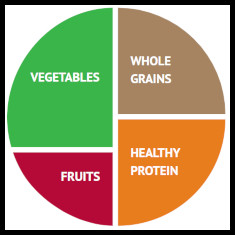
Use the Healthy Eating Plate as a guide for creating healthy, balanced meals—whether served at the table or packed in a lunch box. Click on each section of the interactive image below to learn more.
Make most of your meal vegetables and fruits – ½ of your plate. Aim for color and variety, and remember that potatoes don’t count as vegetables on the Healthy Eating Plate because of their negative impact on blood sugar.
Read more
Positive effects from sports are achieved primarily through physical activity, but secondary effects bring health benefits such as psychosocial and personal development and less alcohol consumption. Negative effects, such as
the risk of failure, injuries, eating disorders, and burnout, are also apparent. Because physical activity is increasingly conducted in an organized manner, sport’s role in society has become increasingly important over the
years, not only for the individual but also for public health. In this paper, we intend to describe sport’s physiological and psychosocial health benefits, stemming both from physical activity and from sport participation per se.
Read more
Due to the accumulated fats in muscle tissue, muscle atrophy is prevalent in individuals with NLSD-M. Exercise can help with muscle hypertrophy which will help with things like mobility, balance and any other day to day activities.
A properly developed strength training program for patients with NLSD-M should take a more holistic/full body approach as opposed to a body part specific split seen in bodybuilder type programs. Programs designed for patients should lean more
towards unilateral (one arm or leg at a time) as opposed to a traditional bilateral approach seen in exercises like barbell back squat, barbell bench press or the deadlift. This helps minimize any muscle imbalances or compensation patterns that
could be developed to take over for weaker muscles in the arms and/or legs.
Read more
With hundreds of supplements available, it’s hard to believe that not every nutrient in whole foods has been captured in a capsule. That’s why eating a variety of healthy foods is the best way to meet your health needs. But if you’re low on a certain vitamin or mineral, or just want to cover all bases with a daily MVM (multivitamin/mineral), these tips will help you get the most from it.
You can take your MVM any time you’d like. Your body absorbs some of its vitamins better with food, so you may want to take it with a meal or a snack. You’ll also avoid the upset stomach that you can get when you take it on an empty stomach. Not a breakfast person? Have it with lunch or even dinner.
Read more
Smoking is a primary risk factor for cardiovascular disease (CVD). Especially if you have coronary artery disease (CAD), better known as “heart disease,” that’s reason enough to quit. But if you need more reasons, the Surgeon General stresses that cigarettes are an addictive, deadly mix of over 7,000 chemicals that damage
your arteries, lungs, reproductive system, and children’s health. Smoking also makes diabetes more difficult to manage, and it can cause sudden blood clots, heart attacks, and stroke. And don’t forget, smokeless tobacco is no better than cigarettes, and they both put you at higher risk for cancer.
It may sound overwhelming, but there’s something you can do about your risk: Quit tobacco today, and you can reap the many benefits of quitting! Quitting isn’t easy.
Read more
“How do you find work and life balance?”
I get asked this question very often, especially when facilitating workshops. No matter the topic, the notion of balance comes up all the time. People believe my life is balanced and want to know how I do it.
Life balance is a mirage — the closer you think you get, the further away it goes. "Stop aiming for it, and you’ll find balance," I tell them.
Maybe you feel disappointed — that’s how most people initially react when I provide this answer. They were expecting five productivity tips, not a play on words. However, when I make them go through some exercises, they realize this simple statement has more profound implications.
Read more
The longer you struggle with obesity, the more likely you are to continue struggling with obesity for years to come. Obesity isn’t something that happens suddenly. There are years of unhealthy behavior and thousands of unhealthy choices that go into an unhealthy lifestyle,
and making the choice to undo those decisions takes time and effort, but beyond that it takes balance. When you are trying to lose weight, it can be easy to grow discouraged if after just a few short days you don’t see yourself making any true progress towards your weight loss
goals, but that is a dangerous mental trap that can lead you far astray from ever being able to meet your weight loss goals.
Read more
Relaxation techniques are a great way to help with stress management. Relaxation isn't only about peace of mind or enjoying a hobby. It's a process that lessens the stress effects on your mind and body. Using ways to relax can help you cope with everyday stress.
And these options can help with long-term stress or stress related to many health problems, such as heart disease and pain.
Whether your stress is out of control or you've already got it tamed, you can benefit from relaxation techniques. Learning basic relaxation techniques is easy. Relaxation techniques are often free or low cost and pose little risk. And they can be done anywhere.
Read more
At this extreme moment, we began working from home, away from campus, and keeping social distance for as many
people as possible. As we stay home and are stuck with the foods that have been in our fridge or pantry for a while,
we are temporarily living a sedentary lifestyle with increased odds of physical inactivity, excessive eating and sitting,
stress, anxiety, and depression. In particular, many of us will gain some weight during the pandemic and may keep the
extra weight permanently, which may carry considerable health risks for type 2 diabetes, hypertension, heart attack,
stroke, and other health problems.
Read more